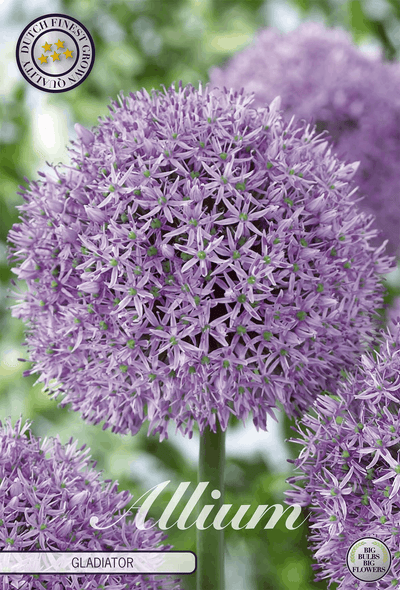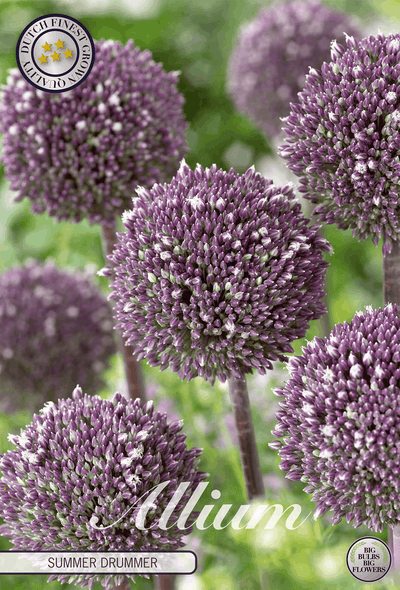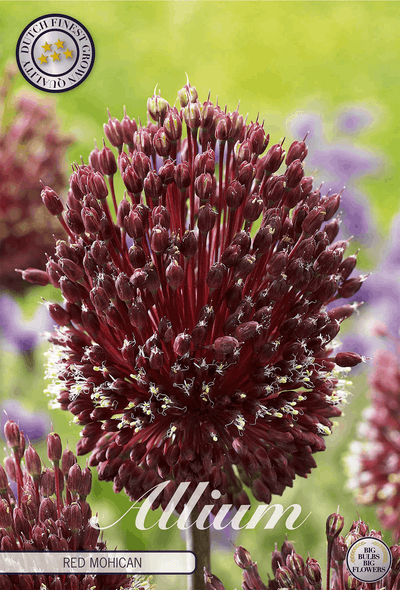

Alliums usually flower from late spring into summer. The best-known ornamental alliums, such as giant alliums like Reuze Allium, stand out most in May and June, but within the range there are also early varieties that start as early as April and late types that extend the flowering display into July or August. The flowering time depends not only on the variety, but also on sun, drainage and care after flowering. So if you want to enjoy alliums for longer, look at the flowering period and let the foliage and flower heads ripen properly. Want to compare varieties and flowering times? Allium bloembollen bekijken.
Flowering time by type: from April to August
Alliums do not have one fixed flowering month. Flowering varies quite a lot across the different groups. Wondering whether they return each year? See Allium als vaste plant.
| Group | Usually in flower | Height | Flowering effect |
|---|---|---|---|
| Giant alliums | Mainly May-June | Tall | Large round flower heads that seem to float above the border |
| Compact alliums for pots | Often April-May or early May-June | Low to medium | Neat, compact colour accent |
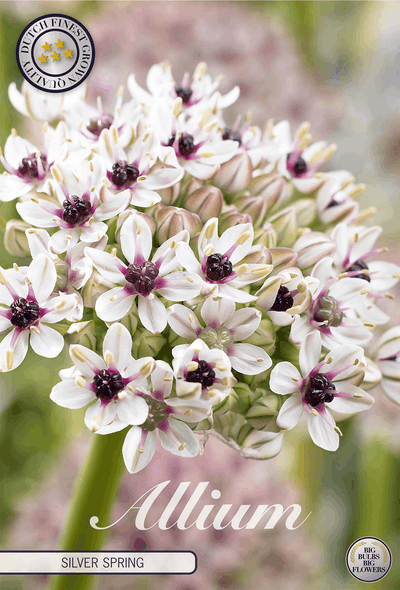
| White selections | Usually May-June | Medium to tall | Calm, fresh contrast among other flowering plants |
| Naturalising alliums | Often May-July, sometimes continuing later | Low to medium | Loose, natural effect in groups |
How to give alliums the best chance of abundant flowering
- Plant ornamental allium bulbs in autumn, from September to November.
- When planting, take bulb size into account: larger bulbs go deeper into the ground and also prefer a little more space between them than smaller ones.
- When planting and caring for alliums, choose a sunny spot with well-drained soil if possible. Partial shade can work for some types, but wet soil often causes problems. See Allium planten en verzorgen for details.
- If the soil is too wet, improve drainage. If it is very poor, use a suitable soil improver so the bulbs can root better.
- Extra water is mainly useful in dry spells, and a spring feed can help in poor soil. It is better to plant alliums in groups rather than scattering them around; that makes the flowering much more striking.
Is allium not flowering? These are the most common causes
- Too little sun often leads to fewer flowers or none at all.
- Soil that is too wet or an incorrect planting depth can weaken the bulb, so flowering does not happen.
- Leaves removed too early do not give the bulb enough time to build up reserves for the following year.
- Older, overcrowded clumps can flower less profusely after a few years and can then be divided or moved. Sometimes allium does flower, but it is hardly noticeable because taller neighbouring plants push the stems aside or hide them.
After flowering: let foliage ripen and handle flower heads wisely
- You can cut off spent flowers if you want to limit self-seeding, but you can also leave the seed heads in place as a decorative detail.
- With flower bulbs after flowering, it is important always to leave the foliage in place until it has turned yellow. That allows the bulb to store energy for flowering the following year. For more tips, see Bloembollen na de bloei verzorgen.
- Only water during prolonged dry spells and, if needed, give a little feed after flowering to support recovery.
- Lifting is usually not necessary. Only when flowering declines or clumps become very dense is dividing or moving useful.
Combining alliums for more flowering impact in borders and pots
Allium fills a lovely moment in the garden: after the earliest spring bulbs and before or among the first summer flowers. Especially in May and June, ornamental alliums bring plenty of structure, and with late types or seed heads that effect continues into July. That makes alliums a strong link in a border that should not go quiet.
Tall giant alliums can easily rise above perennials, while the foliage of those neighbouring plants can later hide the ornamental allium's yellowing leaves. Alliums for pots work well in smaller containers or close to a patio, while naturalising types create a looser look in small groups. There is also something else: the flowers often attract bees, and the seed heads remain decorative even after the colour has faded.
What Allium actually means: ornamental onion, the onion family and edibility
In Dutch, allium is usually called ornamental onion when it refers to garden bulbs. It belongs to the same family as onion, leek and garlic, which explains the name and sometimes also a light onion scent when you bruise the leaves. The ornamental alliums you plant in the garden are mainly meant as ornamental plants and are not generally for eating. There are edible relatives, such as wild garlic, but that is not the same as the classic globe-shaped ornamental allium that you plant as allium bulbs in a border or pot.